
Rikkyo University: Ikebukuro’s English-Taught Liberal Arts Hub and a Private MARCH Elite Where GLAP Admits Only 20 Students a Year
Published on December 21, 2025
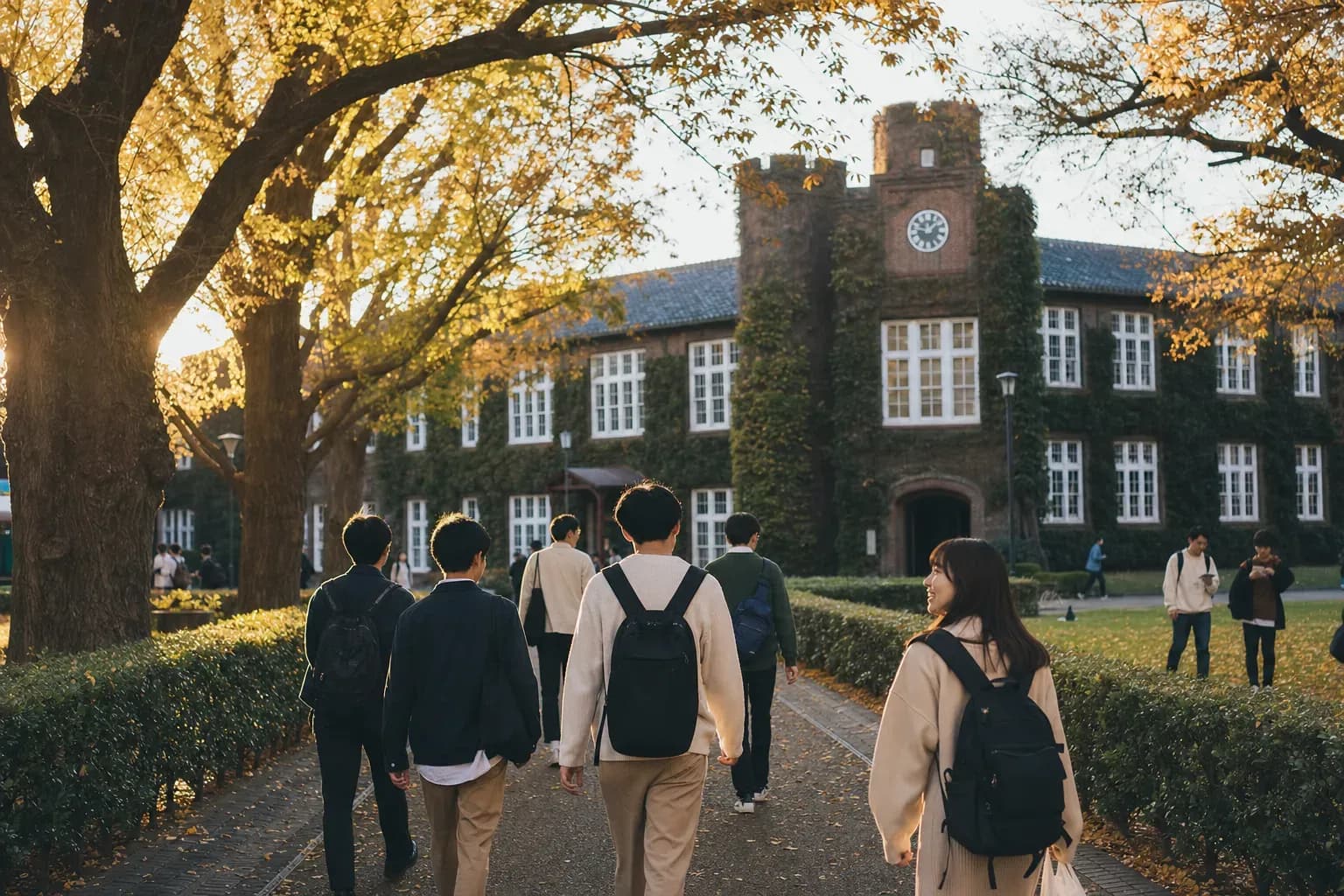
If you have heard the term “MARCH” in Taiwan, it refers to Japan’s second tier of elite private universities: Meiji, Aoyama Gakuin, Rikkyo, Chuo, and Hosei, five long-established private universities in Tokyo. Rikkyo University is the one with the most “British gentleman” atmosphere among them: founded in 1874 by Channing Moore Williams, an American Episcopal missionary, with a red-brick chapel, a British-style crest, and a green campus in the heart of Ikebukuro. Rikkyo’s character is completely different from Waseda’s “populist outsider” energy or Keio’s “financial elite” image.
What truly earns Rikkyo a place on this Top 25 list is GLAP (Global Liberal Arts Program), one of the smallest and most refined English-taught Liberal Arts programs among Japan’s private universities. It admits only around 20 students each year, requires one year of study abroad, is based on the Ikebukuro campus, and charges around JPY 1.3M in annual tuition. It is a “boutique English-taught undergraduate program” positioned between Sophia FLA and ICU. If you want to study English-taught Liberal Arts in one of Tokyo’s liveliest districts, Ikebukuro, while also benefiting from the facilities and alumni network of a private university, Rikkyo GLAP is an option you should take seriously.
1. Basic Information
| Item | Details |
|---|---|
| Founded | 1874 (originating as St. Paul's School, founded by an American Episcopal missionary) |
| University type | Private university (Anglican Christian tradition) |
| Location | Ikebukuro, Toshima City, Tokyo (main campus); Niiza, Saitama Prefecture (some faculties) |
| Campus | Ikebukuro: about 6.5 hectares; Niiza: about 25 hectares |
| Undergraduate students | ~17,000 |
| Graduate students | ~1,500 |
| Student-faculty ratio | 1:24 |
| Motto | "Pro Deo et Patria" (For God and Country) |
| Crest symbol | Maple leaves + shield (British-style heraldry) |
2. World Rankings
| Ranking | Position |
|---|---|
| QS World 2026 | #951-1000 |
| THE World 2026 | #1001+ |
| THE Japan University Rankings 2024 | #22 |
| THE Japan “International Outlook” category | Top 30 |
| Japan private university deviation-score ranking | MARCH group, on the same tier as Aoyama Gakuin and Meiji |
Rikkyo is one of the private universities selected under SGU Type B, Global Traction Type. Although its QS / THE global rankings are less eye-catching than Waseda, Keio, or Sophia, Rikkyo sits firmly at the top of Japan’s second tier in the domestic job market, the private MARCH group, and humanities and social sciences deviation scores. For Taiwanese families, Rikkyo’s value is not in its global ranking, but in the combination of “Tokyo Ikebukuro + elite private university + boutique English-taught program.”
3. Admissions Data (2024 Entry)
International students at Rikkyo mainly have two pathways: GLAP, which is fully English-taught, and the Dual Language Pathway, which is bilingual.
GLAP (Global Liberal Arts Program) Applications
| Indicator | Figure |
|---|---|
| Applicants | ~120-180 |
| Admitted students | ~20-25 |
| Acceptance rate | About 12-18% |
| Taiwanese admits per year | 1-3 students |
Dual Language Pathway (DLP) Applications
| Indicator | Figure |
|---|---|
| Faculties covered | College of Business, College of Sociology, College of Intercultural Communication, College of Psychology, etc. |
| Overall acceptance rate | About 25-35% |
| Taiwanese admits per year | About 3-8 students |
Application Requirements (GLAP)
| Item | Requirement |
|---|---|
| English proficiency | TOEFL iBT 80+ / IELTS 6.5+ / TOEIC 800+ (iBT 95+ recommended for competitiveness) |
| Standardized tests | SAT 1200+, ACT 25+, IB 32+, or 3 A-Level subjects at B or above |
| Japanese | Not required at all |
| High school GPA | 3.3/4.0 or above |
| Recommendation letters | 2 letters |
| Essay | Personal Statement + Why Rikkyo / Why Liberal Arts |
| Interview | Required, online English interview |
International Students
- International students make up about 5% of the university overall, including exchange students
- International students make up about 30-40% of GLAP classes
- Rikkyo has 180+ partner universities, including Berkeley, Cambridge, Sciences Po, NTU, and NCCU
4. Tuition and Financial Aid
2025 Tuition (GLAP)
| Item | Amount (JPY) | Approx. NTD |
|---|---|---|
| Admission fee | 300,000 | ~63,000 |
| Tuition (annual) | About 1,300,000 | ~270,000 |
| Facilities / miscellaneous fees | About 200,000 | ~42,000 |
| Dormitory / rent (monthly, around Ikebukuro) | 70,000-100,000 | ~15,000-21,000 |
| Living expenses (monthly, Tokyo) | 80,000-100,000 | ~17,000-21,000 |
| Estimated total four-year cost | About JPY 10-12M | ~NTD 2.1-2.5M |
Rikkyo University Scholarships for International Students
Rikkyo offers relatively generous scholarship structures for GLAP and DLP international students:
- Rikkyo University International Student Scholarship: 30-50% tuition reduction, awarded based on admissions results
- Rikkyo University “Tachikawa” Scholarship: JPY 500,000 annual grant
- MEXT Embassy Recommendation Scholarship: available to a small number of GLAP international students
- JASSO Student Exchange Support Program: JPY 48,000 per month
In practice, most GLAP international students receive a 30% tuition reduction, bringing the annual cost for Taiwanese families down to about NTD 180,000-200,000.
5. Program Structure / Signature Programs
GLAP (Global Liberal Arts Program)
Rikkyo’s “boutique program,” admitting only about 20 students each year:
- Four-year, fully English-taught undergraduate program
- Mandatory one-year study abroad in the third year: options include Berkeley, UCLA, King's College London, Sciences Po, Yonsei, and 30+ partner universities
- Choose one of three fields: Civil Society, Business, or Humanities
- Core courses: Critical Thinking, Academic Writing, Global Issues, Research Methods
- Thesis writing: students must complete an English Senior Thesis in the fourth year
Dual Language Pathway (DLP)
Rikkyo’s other English-taught pathway, covering four faculties:
- College of Business BBL (Bilingual Business Leader Program): bilingual Japanese-English business program, with a dual degree option with Bentley University
- College of Sociology GLS: English-taught global social studies
- College of Intercultural Communication CIC: partially English-taught intercultural communication program
- College of Psychology PMR: English-taught pathway linked to graduate study in psychology
Well-Known Faculties (Japanese-Taught, for Context)
- College of Business: Top 5 among private university business programs in Japan, with a Bentley dual degree
- College of Sociology: Japan’s leading private university sociology faculty
- College of Tourism: Japan’s only private university faculty dedicated independently to tourism
6. Campus Culture / University Personality
Rikkyo’s campus culture can be summed up in a few words: British, gentlemanly, traditional, and most beautiful during the Christmas season.
- Anglican Christian tradition: the campus has Rikkyo University Chapel, a red-brick church; every Christmas season the campus is decorated with lights and becomes a landmark scene in Ikebukuro
- “Rikkyo Christmas”: in December, Christmas lights hang from the red-brick buildings near the main gate, creating one of Tokyo’s most romantic university campus photo spots
- Sports tradition: member of the Tokyo Big6 Baseball League, alongside the University of Tokyo, Kyoto University, Waseda, Keio, Meiji, and Hosei
- Alumni network: the “Rikkyo-kai” alumni association is extremely tight-knit, and Rikkyo has strong placement in finance, media, and advertising
- Style and atmosphere: relatively conservative and British-influenced, unlike Waseda’s “popular passion” style
Rikkyo is “the private campus in Tokyo that feels most like an old British university,” which gives it a character very different from Waseda, Keio, and Sophia.
7. Location / Campus Environment
Ikebukuro Campus (Main Campus)
- Ikebukuro is one of Tokyo’s three major commercial districts, alongside Shinjuku and Shibuya
- The campus gate is just a 5-minute walk from Ikebukuro Station
- Red-brick arch at the main gate, red-brick buildings across campus, and an overall classic British architectural style
- Within 1 kilometer: cinemas, department stores, bookstores, the Animate flagship anime store, and Sunshine City
- Ikebukuro is one of Tokyo’s relatively affordable central districts for housing, about 15-25% cheaper than Shinjuku and Shibuya
Niiza Campus (Saitama Prefecture)
- Home to the College of Tourism, College of Community and Human Services, and College of Contemporary Psychology
- About 30 minutes from Ikebukuro by train or bus
- Larger campus with a more natural environment
- Most international students have little contact with this campus
Recommended Housing Areas Around Ikebukuro
- Shiinamachi, Higashi-Nagasaki, Kanamecho: 10-15 minutes on foot; monthly rent JPY 60,000-80,000
- Itabashi City, Kita City: 10-15 minutes by commute; monthly rent JPY 55,000-75,000
8. Research and Resources
Rikkyo is a teaching-oriented + mid-sized research private university, with research output in the middle range among private institutions:
Libraries
- Ikebukuro Main Library + Niiza Library: total holdings of about 2 million volumes
- 24-hour opening periods: extended hours until early morning during exam periods
- Comprehensive electronic resources: JSTOR, ProQuest, EBSCO
Research Institutes
- Rikkyo Institute of Economic Research (one of the important private university centers for economics in Japan)
- Rikkyo Institute for Intercultural Communication
- Rikkyo Institute of Tourism (Japan’s leading center for tourism research)
International Exchange Resources
- 180+ partner universities
- GLAP students must complete a one-year exchange
- Offers summer institute programs, short-term study tours, and more
- Has a double degree partnership with Bentley University, a well-known business university in Massachusetts, United States
9. Notable Alumni
Rikkyo alumni have very strong placement in media, advertising, literature and the arts, and finance:
- Shigeo Nagashima (legendary Yomiuri Giants player, one of Japan’s baseball icons)
- Arata Isozaki (Pritzker Architecture Prize laureate and world-class architect)
- Edogawa Ranpo (master of mystery fiction, with many works set around Rikkyo)
- Haruma Miura (late well-known actor)
- Satomi Tezuka (veteran actress)
- Manami Tanaka (NHK anchor)
- Hiroshi Mikitani (founder of Rakuten; although his main academic background is Hitotsubashi, he has deep ties with Rikkyo)
- Numerous senior executives in Japanese advertising / Dentsu / Hakuhodo
Rikkyo ranks among Japan’s top 5 private universities for placement in advertising / media / publishing / cultural industries.
10. Rikkyo Facts You May Not Know
- Rikkyo has been voted Japan’s most beautiful university campus at Christmas. Every December, Christmas lights are hung on the red-brick buildings, attracting large numbers of Tokyo couples and families who come specifically to take photos. Taiwanese students in Japan often say: “Rikkyo’s campus during Christmas season makes you forget you are in Japan.”
- Rikkyo’s school song, “St. Paul's Will Shine Tonight,” is sung in English. It is one of the very few Japanese universities with an English school song, reflecting its Anglican background.
- The Ikebukuro “Sunshine 60” skyscraper is right next to Rikkyo. After class, Rikkyo students often head to Sunshine City, the Animate flagship store, or Toho Cinemas Ikebukuro.
- Rikkyo and Tokyo Big6 Baseball: every spring and autumn, Rikkyo plays against the University of Tokyo, Waseda, Keio, Meiji, and Hosei. This is Japan’s oldest university baseball league, and Rikkyo is a founding member.
- GLAP is the program among Japan’s private universities that feels “most like ICU, but with higher tuition.” In exchange, students get the convenience of central Ikebukuro and the career network of MARCH.
11. Typical Admitted Student Profile (GLAP International Students)
- High school GPA of 3.5/4.0 or above across three years
- TOEFL iBT 95+ or IELTS 7.0+
- SAT 1250+, IB 33+, or 3 A-Level subjects at B or above
- Able to clearly explain “why Liberal Arts, why Tokyo, and why Rikkyo”
- Has meaningful experience in at least one of the following: overseas exposure, Model United Nations, student government, or community service
- Interested in humanities, social sciences, or cultural studies
- Recommendation letters from an English teacher, homeroom teacher, or club advisor
- Has a clear plan for either “working in Japan after graduation” or “applying later to graduate school in the United States or United Kingdom”
12. What Kind of Student Is It Best For?
✓ Best suited for:
- Students who want to study English-taught Liberal Arts in Tokyo’s lively Ikebukuro district
- Students who want private university facilities, activities, clubs, and Christmas atmosphere
- Students interested in humanities, business, social sciences, or intercultural studies
- Students willing to pay about JPY 1.3M in private university tuition, with an expectation of receiving a 30% tuition reduction
- Students who want a mandatory one-year overseas exchange to strengthen their resume
- Students aiming for advertising, media, publishing, foreign companies, or trading companies
- Students who like a British-style / Anglican-tradition campus atmosphere
✗ Not necessarily suitable for:
- Students who want medicine, engineering, or pure sciences (Rikkyo does not have science, engineering, or medical faculties)
- Students on a very tight budget who cannot afford private university tuition (consider AIU, Tsukuba, or Chiba instead)
- Students who want the halo of a QS Top 500 global ranking
- Students who want to maximize bonus points for the HSP highly skilled professional permanent residency route (Rikkyo is not on the +10 point list)
- Students who want a very large faculty, broad flexibility, and many major options (GLAP has only 20 students)
13. HSP Highly Skilled Professional Permanent Residency Route
Rikkyo University is not on the HSP highly skilled professional “+10 point bonus” list, which is limited to 13 flagship national universities. However, Rikkyo graduates can still accumulate HSP points through salary + English ability + years of work experience.
The most common HSP route for Rikkyo graduates:
- Rikkyo GLAP → advertising / trading companies / foreign companies (annual salary JPY 5-8M)
- Accumulate 70+ points over 3-5 years → HSP Highly Skilled Professional Type 1
- Apply for permanent residency after 1-3 years
In practical terms, because Rikkyo GLAP combines English ability, overseas exchange experience, and a private university network, graduates have very strong opportunities at Dentsu, Hakuhodo, JTB, trading companies, and foreign banks. The speed of HSP point accumulation depends on placement, not the university name itself.
For detailed strategy, refer to Dr. G.’s internal resources, “Post-Graduation Visa Strategy / 05_Japan_Visa_Strategy” and “Master Grad School Database / Japan.” If you want to plan a two-step route of “Rikkyo GLAP → master’s in the United States / United Kingdom → return to Japan for employment,” the “Top30 Cost-Performance Report” also includes a full evaluation model.
Conclusion
Rikkyo GLAP is designed for students who want the atmosphere of a private university campus while also wanting a boutique English-taught program. It is not as all-in as AIU, which is 100% English-taught, rural by design, and cheaper as a public university. It is also not as large as Waseda SILS, which admits around 600 students a year and has a much bigger scale. Rikkyo GLAP follows a route built around a “20-student boutique class + central Ikebukuro + private MARCH network + one-year overseas exchange”, and that is a very specific sweet spot.
Taiwanese families most often ask: “How exactly is Rikkyo GLAP different from ICU and Sophia FLA?” The answer is: ICU is pure religious Liberal Arts, Sophia FLA is Jesuit elite, and Rikkyo GLAP is Anglican British-style. All three are strong, but their personalities are completely different. If you are drawn to “central Tokyo + British red brick + Christmas lights + private boutique education,” then in one sentence: Rikkyo GLAP is the private English-taught undergraduate program in Japan that feels most like an Oxbridge college.