
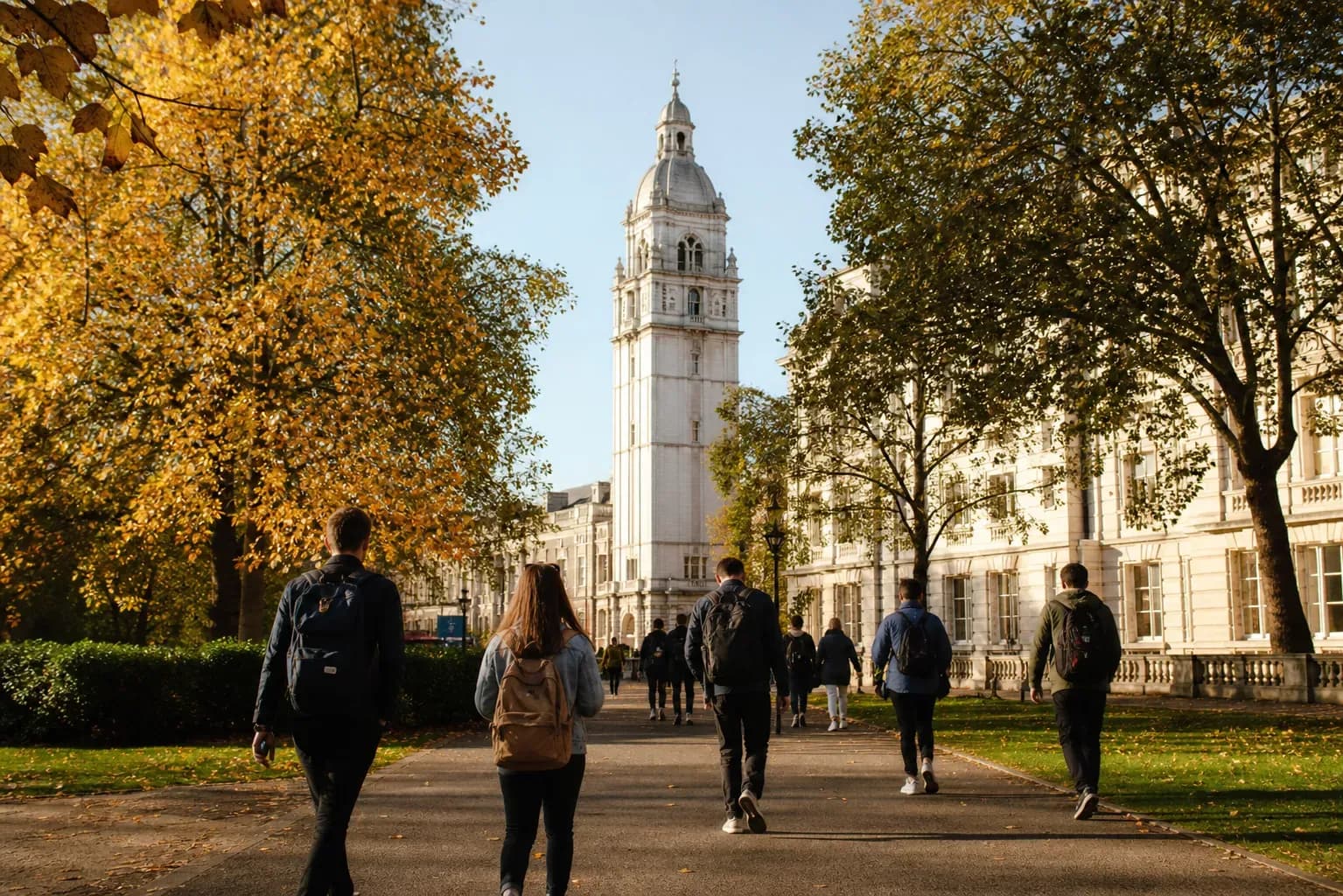
Imperial College London: The UK’s Pure STEM Powerhouse, South Kensington’s Scientific Core, QS World #2
Published on December 11, 2025
Ranked #2 globally in QS 2026, behind only MIT, and consistently among the UK’s top five universities, Imperial College London is the UK’s only elite university that does only STEM. There is no humanities faculty, no philosophy department, and no arts school. Imperial’s existence sends a clear message: engineering, science, medicine, and business at world-class level; everything else is secondary.
If Oxford is the factory of British political elites and Cambridge is a monastery of pure scholarship, then Imperial is Europe’s version of MIT. It sits in South Kensington in London Zone 1, beside Hyde Park, Royal Albert Hall, and the Natural History Museum. Imperial does not have a collegiate system or an 800-year tutorial tradition, but it does have Europe’s strongest engineering, one of the very best medical schools, and direct geographic access to London’s finance and technology sectors.
1. Basic Information
| Item | Details |
|---|---|
| Founded | 1907 (formed through the merger of 3 colleges) |
| Location | South Kensington, London Zone 1 |
| Campus | Main South Kensington campus + 4 satellite campuses |
| Undergraduates | ~10,500 |
| Postgraduates | ~10,400 |
| Group affiliation | Russell Group |
| Motto | Scientia imperii decus et tutamen (Science is the glory and safeguard of the empire) |
| Academic composition | 100% STEM + Business |
2. World Rankings
| Ranking | Position |
|---|---|
| QS World 2026 | #2 |
| THE World 2026 | #8 |
| Complete University Guide 2026 (UK) | #5 |
| Guardian University Guide 2026 (UK) | #6 |
| QS Engineering & Technology | #5 |
| QS Medicine | #6 |
| THE Engineering | #10 |
3. Admissions Data (2025 Entry)
| Indicator | Figure |
|---|---|
| Applicants | ~28,500 |
| Admitted students | ~3,200 |
| Overall acceptance rate | Around 11% |
| International applicant acceptance rate | ~7% |
| Medicine acceptance rate | ~9% (including UCAT + interview) |
| Computer Science acceptance rate | < 8% |
| Yield Rate | ~75% |
Typical A-Level / IB Offers
| Subject area | Standard A-Level offer | Standard IB offer |
|---|---|---|
| Computing / Engineering | A*A*A (including Math A*) | 40-42 points (HL 776) |
| Math / Physics | A*A*A (including Math A* + Further Math) | 40-41 points (HL 777 including HL Math) |
| Medicine | A*AA (Chemistry + Biology) + UCAT | 39 points (HL 766) |
| Business (BSc Econ, Finance & Data Science) | A*A*A (including Math) | 41 points (HL 766 including HL Math) |
| Materials / Bio / Chem | A*AA | 38-39 points |
International Students
- International students make up around 33% of the undergraduate population, one of the highest proportions in the UK
- Students come from 140+ countries
- Taiwan typically has around 10-20 admits per year, mainly in CS, Engineering, and Medicine
- Applications must go through UCAS, and most STEM departments also require MAT / STEP / Imperial Computing Test
4. Tuition and Living Costs
2025-2026 International Tuition Fees
| Subject area | Tuition (per year) |
|---|---|
| Engineering / NatSci / CS | £41,750 |
| Medicine (Years 1-3) | £52,100 |
| Medicine (Clinical, Years 4-6) | £58,300 |
| Business School (BSc) | £41,750 |
| Math | £41,750 |
London Living Costs (Very High)
| Item | Amount |
|---|---|
| On-campus or nearby accommodation | £12,000-18,000/year |
| Food + transport + personal expenses | £8,000-10,000/year |
| Total (including tuition) | Around £62,000-72,000/year |
Graduate Route Visa
After graduation, students may apply for the Graduate Route, which grants 2 years of work permission in the UK for bachelor’s / master’s graduates and 3 years for PhD graduates, with no employer sponsorship required. A very high proportion of Imperial graduates stay in the UK, mainly because the campus is surrounded by the City of London finance sector and the King’s Cross / Tech City technology cluster.
Scholarships
- President's Undergraduate Scholarship: £5,000/year (multi-year)
- Imperial Bursary: Based on household income, mainly for UK home students
- Chevening / GREAT: UK government scholarships requiring separate applications
- Overall scholarship funding is smaller than at Oxbridge: Imperial does not compete for students primarily through scholarships; it relies on location and rankings
5. Academic Structure / Flagship Programs
Undergraduate Structure (4 Major Faculties)
- Faculty of Engineering (largest): Aero, Bioengineering, Chemical, Civil, Computing, EEE, Materials, Mechanical
- Faculty of Natural Sciences: Chemistry, Life Sciences, Math, Physics
- Faculty of Medicine: 6-year MBBS and biomedical graduate research
- Business School: BSc Econ Finance & Data Science (undergraduate) + MSc / MBA
Flagship Programs
- Computing (BEng / MEng): One of the UK’s top three CS programs, standing alongside Oxbridge. Main graduate destinations include Google London, DeepMind, Two Sigma, Citadel, and Jane Street
- Aeronautical Engineering: The UK’s flagship aerospace engineering program, on par with Cambridge. It has produced multiple CTOs at Airbus and Rolls-Royce
- MEng Mathematics: A 4-year program with diverse pathways in Math + Stats / Pure / Applied
- Medicine (6-year MBBS): One of the UK’s top three medical schools, with three major teaching hospitals: St Mary's / Charing Cross / Hammersmith
- BSc Economics, Finance and Data Science: A new STEM business degree launched in 2021, requiring Math A*, and the UK’s only STEM-tagged undergraduate economics program
MEng vs BEng
Most Imperial engineering departments offer a 4-year MEng program, including master’s-level study, which is the standard route in top UK engineering education. The 3-year BEng also exists, but fewer students choose it. The fourth year of the MEng includes a full individual / group project and is a critical year for entering industry or progressing to a PhD.
Teaching Style
Imperial does not use the Oxbridge-style tutorial / supervision model. Instead, it follows a large lecture + small tutorial / lab class structure. The Computing department has around 15-18 hours of lectures and 8-10 hours of labs per week. Its defining features are heavy group project work and industry-aligned teaching, with deep collaboration across City of London companies.
6. Campus Culture / Institutional Personality
Imperial’s atmosphere can be summed up in one sentence: intense, competitive, practical, and international. Its student body is highly diverse, with international students making up 33%, and the workload is heavy enough that local students often joke that "the Imperial workload is real."
Imperial College Union
The student union is highly active, with 180+ clubs and societies. The best-known include RAG (Raising and Giving) charity week, Imperial Tech Society, and Imperial Robotics Society.
Varsity (Against UCL)
Imperial and UCL’s London Universities Varsity Series is an annual sporting rivalry that includes rugby, boat race, squash, and more.
Institutional Personality
The two most famous Imperial student jokes are "work hard, work harder" and "sleep is for the weak". Compared with Cambridge’s air of “elegant elite” tradition, Imperial feels more like “pragmatic engineer” culture. After a lecture, you may be asked to go straight to an interview at the Google London office.
7. Location / Campus Environment
City Positioning
Imperial’s main campus is in South Kensington, London Zone 1, a 3-minute walk from Hyde Park, 5 minutes from Harrods, opposite the V&A Museum, and within walking distance of the Natural History Museum. This is one of London’s most expensive residential areas.
Campus Structure
- South Kensington: Main campus (all undergraduate teaching)
- White City: Imperial’s new research campus, beside BBC and Westfield
- St Mary's / Charing Cross / Hammersmith Hospitals: Clinical bases for the medical school
- Silwood Park: Field base for environmental science
Climate
- London has a temperate oceanic climate, with winters around 2-8°C and summers around 15-25°C
- It is cloudy and rainy throughout the year, with short daylight hours in autumn and winter
Campus Landmarks
- Queen's Tower (1893 tower, originally part of the Imperial Institute)
- Sherfield Building (student center)
- Royal Albert Hall (graduation venue, next to campus)
- Imperial College Library (open 24 hours)
8. Research and Resources
Libraries
- Imperial College Library: Open 24 hours, with extensive multimedia and engineering databases
- Central Library and department-specific libraries
Notable Laboratories / Research Centers
- Faraday Building: A landmark for electrical engineering, carrying forward the intellectual legacy of Maxwell and Faraday
- Royal School of Mines (RSM): Founded in 1851, one of the world’s oldest mining and metallurgy schools
- Data Science Institute
- Grantham Institute for Climate Change
- Francis Crick Institute (collaboration): One of Europe’s largest biomedical research institutes
9. Notable Alumni
- Science: Alexander Fleming (discovered penicillin, St Mary's), Thomas Huxley (Darwin’s bulldog), Patrick Blackett (Nobel Physics)
- Technology entrepreneurship: Brian May (Queen guitarist, Imperial astrophysics PhD), Sarah Gilbert (co-developer of the Oxford vaccine, Imperial Medicine)
- Politics: H.G. Wells (science fiction writer, Imperial biology alumnus), Cyril Ramaphosa (President of South Africa)
- Business: Jonathan Ive (Apple Chief Design Officer, though primarily a Newcastle alumnus), multiple Goldman Sachs / McKinsey London partners
- Academia: 14 Nobel Laureates, 3 Fields Medalists
10. Imperial Fun Facts
- Imperial only became independent in 2007: Before that, it was a college of the University of London. It left UoL and began awarding its own degrees during its centenary year in 2007.
- It has no humanities / social sciences faculty: Imperial does not have departments such as History, Philosophy, or Languages, though it does offer electives through the Centre for Languages.
- The school mascot is Felix the Cat: The student newspaper is also called Felix.
- Royal Albert Hall is the graduation venue: Because it is right next to campus. Graduates walk through Imperial Quad into Royal Albert Hall.
- Queen's Tower opens only 12 times a year: The 1893 tower is the only remaining part of the original Imperial Institute and is not normally open for public access.
- Imperial and MIT jokingly call each other sibling schools: Both are STEM-focused, both are located in major cities, and both follow a pragmatic engineering teaching style.
11. Typical Admitted Student Profile
- A-Level A*A*A (including Math A*) or IB 40-42 (HL 776+)
- Math must be A* or IB HL 7
- CS applicants are advised to have STEP experience or take Imperial’s own Computing Admissions Test
- Math / Physics applicants often have STEP 1+2 / PAT results
- Medicine applicants need UCAT + interview (MMI station-style interview)
- Quantifiable academic passion: competitions (USAMO, IMO, IOI), open-source projects, technical portfolio
- Personal Statement of 4,000 characters / 47 lines should be 90% academic + technical projects (Imperial values technical projects more than Oxbridge does)
- Collegiate fit is not a factor: There is no college system; admissions are purely department-based
12. What Kind of Student Is a Good Fit?
✓ Good fit:
- Students who are 100% certain they want to major in STEM or Medicine
- Students who want to work in London, whether in investment banking, AI, biomedicine, or consulting
- Students who adapt well to big-city life and enjoy a diverse international community
- Students aiming directly for an industry path such as Google, DeepMind, or Goldman Sachs
- Students who accept “no humanities faculty” and do not need a broad education
- Students who like the depth of 4-year MEng training and plan to pursue a master’s-level path
✗ Not necessarily a good fit:
- Students who want a broad liberal arts education
- Students who prefer a classical small-town atmosphere and college formal dinner culture (choose Oxbridge / Durham / St Andrews)
- Students who want American-style campus life, Greek Life, and sports culture
- Students who do not want to carry London’s high living costs (starting from £20,000+ per year)
- Students who want to combine humanities or social science subjects alongside their major
Conclusion
Imperial is not the choice for someone who “thinks they might want to be an engineer but is not sure yet.” Imperial is for students who earn A* in both A-Level Math and Further Math and still want something harder, publish a Rust rewrite of their own compiler on Github, and know the latest developments in using deep learning to solve PDEs.
If your trajectory is “1,000+ stars on GitHub by age 16, then entering DeepMind or Citadel straight after graduating at 22,” Imperial is the only UK university that can beat Oxbridge across all three dimensions: location, alumni network, and subject depth. If you are still wondering, “Should I study some philosophy or literature too?” Imperial is not the right fit. That option does not exist here. The point Taiwanese families most often overlook is this: Imperial’s STEM intensity far exceeds Oxbridge’s, because Oxbridge terms are only 8 weeks long, while Imperial runs on a standard 30-week academic year, with lectures, labs, and coursework packed so tightly that there is no May Ball and no leisurely punting. You come to Imperial to build a real scientific foundation, not to experience Britain.
Sources:
- Imperial College London Undergraduate Admissions
- Imperial Tuition Fees 2025-26
- Imperial International Students
- Retrieved on: 2026-05-14