
Hokkaido University: G30 Flagship, MJSP Cultural Studies, ISP Integrated Science, and a World-Class Research Campus in Snow Country
Published on December 25, 2025
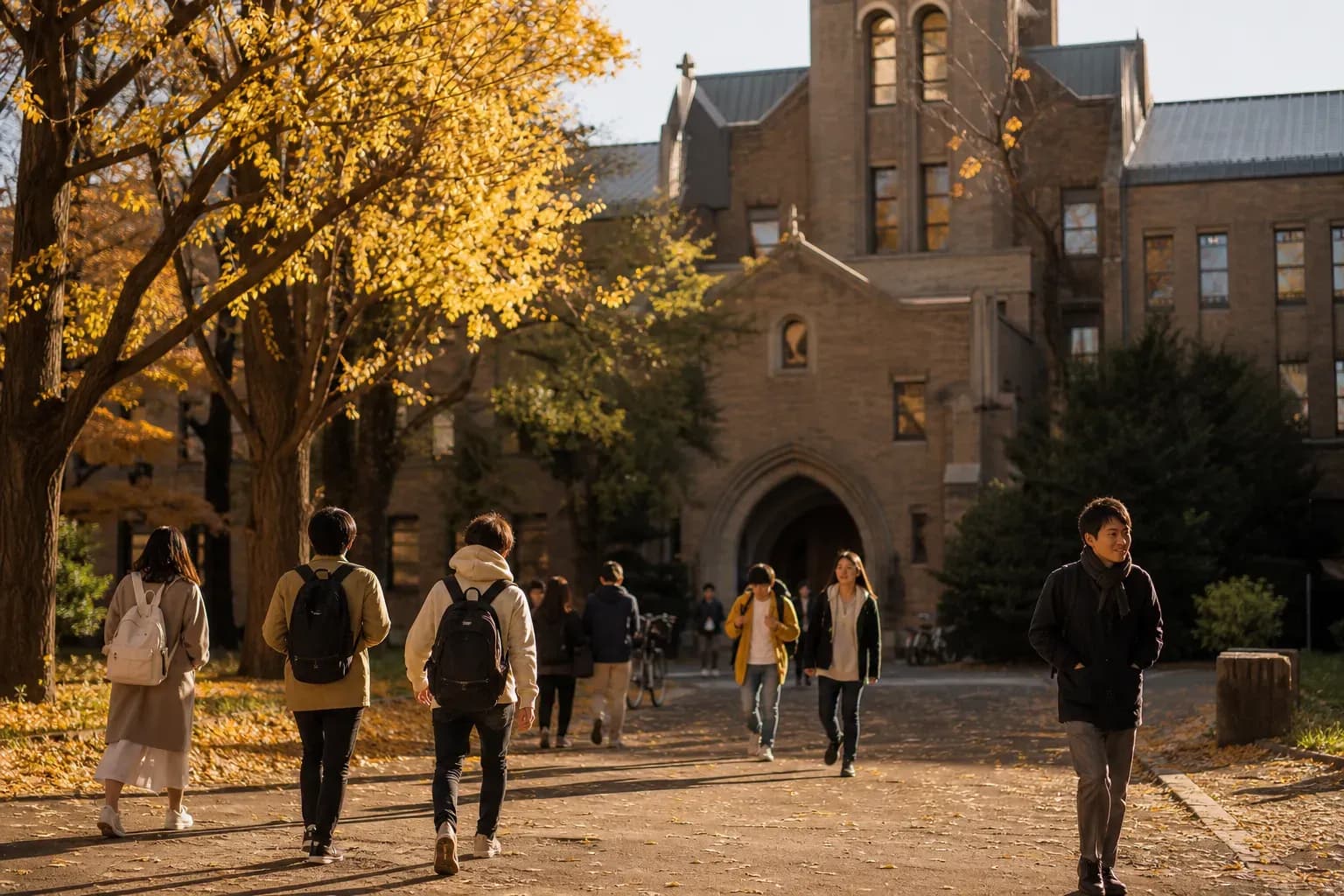
If you Google “Hokkaido University,” the first image that appears is likely “Poplar Avenue”: a long tree-lined path bordered by silvery poplars, covered in snow in winter, lush green in summer, and golden in autumn. This grove, planted in 1903, is located inside Hokkaido University’s Sapporo campus. The campus is within walking distance of central Sapporo, and its 177 hectares are roughly comparable to the entire Meiji Jingu area. Hokkaido University is Japan’s most complete flagship example of “a forest inside the city, and a campus inside the forest.”
Hokkaido University is one of the original 13 G30 universities and an SGU Type A top-tier university, alongside the University of Tokyo, Kyoto University, Tohoku University, Osaka University, Kyushu University, Nagoya University, University of Tsukuba, and Tokyo Institute of Science. It offers two G30 English-taught undergraduate programs: MJSP (Modern Japanese Studies Program) and ISP (Integrated Science Program), one in the humanities and one in science, creating a concise and focused portfolio. No Japanese is required for admission, all four years are taught in English, and annual tuition is JPY 535,800.
What truly attracts Taiwanese families to Hokkaido University, however, is that “the entire city of Sapporo becomes an extension of your campus”: the Sapporo Snow Festival, Lake Toya G7 summit venues, Niseko skiing, Furano lavender fields, and the Otaru Canal. Your four years of university life come with year-round access to one of Japan’s most beloved travel regions.
1. Basic Information
| Item | Details |
|---|---|
| Founded | 1876 (originally Sapporo Agricultural College; later the fifth Imperial University) |
| University type | National university corporation |
| Location | Kita Ward, Sapporo, Hokkaido (Sapporo campus), with an additional fisheries campus in Hakodate |
| Campus | Approximately 177 hectares (Sapporo campus, the largest downtown campus in Japan) |
| Undergraduate students | ~11,000 |
| Graduate students | ~6,200 |
| Student-faculty ratio | 1:7 |
| Motto | "Boys, be ambitious!" |
| Founding figure | William S. Clark (vice president of Massachusetts Agricultural College, USA) |
2. World Rankings
| Ranking | Position |
|---|---|
| QS World 2026 | #173 |
| THE World 2026 | #201-250 |
| QS Asia 2026 | #29 |
| THE Asia 2026 | #29 |
| QS Agriculture & Forestry | #23 globally |
| QS Environmental Sciences | #51 |
| QS Chemistry | #88 |
Hokkaido University is a dual G30 + SGU Type A flagship university. In fields such as agriculture, veterinary medicine, fisheries, low temperature science, and environmental science, Hokkaido University is Japan’s leader, ahead of even the University of Tokyo and Kyoto University in these specific domains. Its Faculty of Agriculture traces its history back to 1876, making it older than the university itself, since it already existed during the Sapporo Agricultural College era.
3. Admissions Data (2024 Entry)
Modern Japanese Studies Program (MJSP)
| Metric | Figure |
|---|---|
| Applicants | ~100-150 |
| Admitted students | ~15-20 |
| Overall acceptance rate | Approximately 13-17% |
| Fields | Japanese studies, society, culture, language, politics, arts |
Integrated Science Program (ISP)
| Metric | Figure |
|---|---|
| Applicants | ~80-120 |
| Admitted students | ~10-15 |
| Overall acceptance rate | Approximately 12-15% |
| Fields | Interdisciplinary science (chemistry, physics, biology, earth science, mathematics) |
Overall G30 Undergraduate Admissions
| Metric | Figure |
|---|---|
| Total applications | ~200-300 |
| Total admits | ~30-40 |
| Taiwanese admits per year | 2-4 students |
Application Requirements
| Item | Requirement |
|---|---|
| English proficiency | TOEFL iBT 80+ / IELTS 6.5+ (iBT 90+ recommended for ISP) |
| Standardized tests | SAT 1250+, ACT 26+, IB 32+, or A-Level with at least B in 3 subjects |
| Japanese | Not required at all upon admission |
| Recommendation letters | 2 letters |
| Essays | Statement of Purpose, Study Plan |
| Interview | Required for some applicants |
International Students
- International students make up approximately 80-90% of G30 undergraduate programs
- Hokkaido University’s overall international student ratio is approximately 11%
- Strong representation from Taiwan, Korea, and Southeast Asia
4. Tuition and Financial Aid
2025 Tuition (Standard National University Rate)
| Item | Amount (JPY) | Approx. TWD Equivalent |
|---|---|---|
| Admission fee | 282,000 | ~60,000 |
| Tuition (annual) | 535,800 | ~110,000 |
| Dormitory (Hokkaido University housing, monthly) | 15,000-35,000 | ~3,300-7,700 |
| Living expenses (monthly, Sapporo) | 55,000-80,000 | ~12,000-18,000 |
| Winter heating cost (monthly) | 8,000-15,000 | ~1,800-3,300 |
| Estimated total cost for four years | Approximately JPY 5.5-7M | ~TWD 1.2-1.5M |
Living costs in Sapporo are 30-40% lower than in Tokyo, but winter heating is a hidden cost from November to March, usually JPY 8,000-15,000 per month. Overall, however, a four-year degree in Sapporo remains significantly cheaper than one in Tokyo.
MEXT Scholarships
- MEXT Embassy Recommendation Scholarship: full tuition waiver + JPY 117,000 per month
- MEXT University Recommendation Scholarship: nominated directly by Hokkaido University
Hokkaido University Internal Scholarships
- Hokkaido University President's Fellowship: top applicants may receive a full tuition waiver
- JASSO Honors Scholarship: JPY 48,000-80,000 per month
- Hokkaido corporate scholarships: partnerships with local food, tourism, and agricultural companies
5. Program Structure / Signature Programs
MJSP (Modern Japanese Studies Program)
- A four-year fully English-taught undergraduate program in Japanese studies
- Covers Japanese society, politics, culture, literature, language, arts, and business
- Students may choose a specialization in years 3-4: Politics, Economics, Sociology, Culture, Language
- Japanese language study is required (students are expected to reach around N3-N2 by graduation)
- Diverse student body: students from Europe, North America, Asia, and other regions with a strong interest in Japan
ISP (Integrated Science Program)
- A four-year interdisciplinary science program taught in English
- Covers chemistry, physics, biology, earth science, and mathematics
- Students choose a specialization from year 2 onward
- Connects with Hokkaido University’s strengths: low temperature science, agriculture, environmental science, and marine science
- Well suited to students who are not yet certain which science field they want to specialize in and want to preserve flexibility
Hokkaido University’s Strong Faculties (Japanese-Taught; Graduate G30 Options Worth Considering)
- Faculty of Agriculture: Japan’s strongest, directly descended from Sapporo Agricultural College, founded in 1876
- Faculty of Veterinary Medicine: Japan’s oldest veterinary medicine program
- Faculty of Fisheries Sciences: based at the Hakodate campus and central to fisheries research in Japan
- Institute of Low Temperature Science: world-class in Antarctic research and polar science
Informal Faculty Consent System (Graduate Level)
For graduate school applications, applicants usually need to contact a professor first and obtain informal consent. Hokkaido University professors are generally international-student friendly, especially in agriculture, environmental science, and low temperature science, where English communication is highly common.
6. Campus Culture / University Personality
Hokkaido University’s culture can be summarized in a few words: freedom, openness, agricultural spirit, and northern resilience.
- The DNA of William S. Clark’s “Boys, be ambitious!”: This slogan, introduced by the vice president of Massachusetts Agricultural College when the school was founded in 1876, remains Hokkaido University’s spiritual motto. The Clark statue on campus is still a favorite photo spot for visitors
- Agricultural spirit: Hokkaido University’s predecessor, Sapporo Agricultural College, was Japan’s first modern agricultural education institution. Students tend to have a much stronger sensitivity to land, food, and the environment than students at many other national universities
- Downtown campus + forest: Hokkaido University’s main gate is a 7-minute walk from Sapporo Station, yet five minutes after entering campus, you are surrounded by forest, ponds, and farms. The Hokkaido University Experimental Farm is still in operation
- A winter lasting five months: From late November to early April, the campus is covered in snow, and winter sports are deeply embedded in student life
- 200+ student clubs: skiing, rock climbing, mountaineering, snowmobiling, and hands-on agricultural clubs
- Affordable and good campus dining: Hokkaido University’s cafeterias are known as some of Japan’s most affordable university dining options, with set meals around JPY 350
Hokkaido University feels like “an American land-grant university combined with northern agricultural culture”, a combination no other Japanese university can replicate.
7. Location / Campus Environment
City Positioning
Sapporo has a population of 1.95 million. It is Japan’s fifth-largest city and the undisputed center of Hokkaido.
- Tokyo to Sapporo: 1 hour 30 minutes by plane (30+ flights daily) / 4 hours by Shinkansen
- Taipei to Sapporo: 4 hours by direct flight, with airfare around TWD 10,000-15,000
- New Chitose Airport to Sapporo: 37 minutes by JR rapid train
- Sapporo Station to Hokkaido University’s main gate: 7 minutes on foot, making it one of Japan’s most convenient downtown universities
Climate
- Winter: -7 to 0°C, with snow cover for 4-5 months and peak snow depth of 1-1.5 meters
- Summer: 18-26°C, offering one of the most comfortable summers in Japan with low humidity and sea breezes
- Hokkaido has no rainy season, something you will not find on Japan’s main island of Honshu
- Skiing is possible for five months of the year
Campus Landmarks
- Poplar Avenue: planted in 1903, 270 meters long, damaged by wind several times and replanted; a well-known Sapporo sightseeing spot
- Clark statue: commemorates the founding figure and “Boys, be ambitious!”
- Ono Pond: a central campus pond with autumn foliage and winter ice
- Central Library: holds approximately 3.8 million volumes
- Hokkaido University Second Farm: a historic farm still in operation, including Saponi red-brick cattle barns
Advantages of Sapporo
- Sapporo Snow Festival: held every February, one of the world’s largest ice and snow festivals, featuring a 3-kilometer corridor of snow sculptures
- Niseko / Rusutsu: Japan’s top ski areas and training grounds for Hokkaido University’s ski club
- Otaru / Hakodate / Furano / Asahikawa: major Hokkaido destinations that students can visit using student fares
8. Research and Resources
Libraries
- Central Library + 14 branch libraries: approximately 3.8 million volumes
- Some areas open 24 hours
- Comprehensive electronic resource subscriptions
Notable Research Institutes
- Institute of Low Temperature Science: Japan’s core institution for polar, Antarctic, snow, and ice research
- Field Science Center for Northern Biosphere: includes experimental farms, forests, and fisheries, giving students hands-on access
- Institute for Catalysis: globally leading in chemistry and materials research
- Creative Research Institution: interdisciplinary frontier research
Nobel Prize and Major Awards
- Akira Suzuki (2010 Nobel Prize in Chemistry): Suzuki coupling reaction, Hokkaido University Department of Chemistry
- Multiple members of the Japan Academy, Order of Culture recipients, and Medal with Purple Ribbon recipients
“Hokkaido University Knowledge Cloud”
- Integrates Hokkaido University research output, library materials, and teaching videos online
- Highly accessible to international students
9. Notable Alumni
- Academia / Nobel Prize: Akira Suzuki (2010 Chemistry), Inazo Nitobe (featured on Japan’s 5,000-yen banknote and one of the founding figures), Takeo Arishima (writer)
- Politics: multiple former Ministers of Agriculture, Forestry and Fisheries and Governors of Hokkaido
- Business: leadership at major Hokkaido-linked food companies such as Asahi Breweries, Nippon Ham, and Snow Brand
- Agriculture: senior leadership across many of Hokkaido’s major agricultural cooperatives, fisheries cooperatives, and forestry organizations
- Media: multiple anchors and media figures at Hokkaido Shimbun and HBC Hokkaido Broadcasting
Hokkaido University graduates have Japan’s strongest influence in food, agriculture, and northern industries, a field-specific advantage other flagship universities cannot replicate.
10. Little-Known Facts About Hokkaido University
- William S. Clark stayed in Sapporo for only 8 months: He arrived in 1876 and returned to the United States in 1877, yet his “Boys, be ambitious!” became Hokkaido University’s enduring motto. Students jokingly call it “the world’s most influential 8-month study abroad experience.”
- Nineteen trees on Hokkaido University’s Poplar Avenue fell during a 2004 typhoon: Students, faculty, and alumni voluntarily donated to replant them, making the avenue a symbol of alumni solidarity.
- Hokkaido University’s Faculty of Agriculture still operates a real farm: There are cows, horses, and sheep on campus, and students can take hands-on livestock courses. Hokkaido University is the only school raising cattle in central Sapporo.
- The “Hokudai gyudon” at the cafeteria costs JPY 350: Made with beef delivered directly from Hokkaido University’s farm, it is one of the best-value university cafeteria dishes in Japan.
- Hokkaido University has Japan’s only official university ski club snowfield: The university owns a ski slope that students can use for free, something not found at other Japanese universities.
11. Typical Admitted Student Profile (G30 Undergraduate)
- High school GPA of at least 3.6/4.0
- TOEFL iBT 90+ or IELTS 7.0+
- SAT 1300+, IB 35+, or A-Level 3A or above
- Able to clearly explain “why Hokkaido University, not the University of Tokyo / Kyoto University / Nagoya University”, usually through angles such as agriculture / environmental science, low temperature science, life in Sapporo, or the interdisciplinary ISP
- STEM competition experience (for ISP) or social research / fieldwork experience (for MJSP)
- Recommendation letters from a high school teacher in a relevant subject area and a homeroom teacher or counselor
- Genuine psychological readiness for northern living and a long snowy winter
- A career vision connected to Japanese food, agriculture, or the environment
12. What Kind of Student Is a Good Fit?
✓ Good fit for students who:
- Want to study at a top Asian research university for JPY 535,800 per year
- Have genuine passion for agriculture, food, environmental science, low temperature / polar research, or marine studies
- Like the combination of downtown campus + forest + snow
- Want non-humid summers and winters where skiing is possible
- Are interested in Japanese studies (MJSP) or interdisciplinary science (ISP)
- Want to pursue the HSP Highly Skilled Professional permanent residency pathway (Hokkaido University is on the +10-point list)
- Are interested in careers in Japan’s food industry, agriculture, or tourism sector
✗ May not be ideal for students who:
- Cannot tolerate a snow season lasting five months
- Want to study pure medicine or pure law (these faculties are taught only in Japanese)
- Expect central Tokyo-style nightlife (Sapporo is Japan’s fifth-largest city and has nightlife, but not on the scale of Tokyo or Osaka)
- Want the prestige halo of a QS Top 100 university (Hokkaido University sits in the Top 200 range)
- Have no interest in agriculture, the environment, or northern industries, which are Hokkaido University’s core strengths
13. HSP Highly Skilled Professional Permanent Residency Pathway
Hokkaido University is on the HSP Highly Skilled Professional “+10 bonus points” list, which means:
- Master’s degree + annual income of JPY 6 million → eligible to apply for permanent residency in 3 years
- PhD + annual income of JPY 8 million → eligible to apply for permanent residency in 1 year
- After obtaining permanent residency, a spouse may work, parents may qualify for long-term residence, and children may access Japanese nationality pathways
Common HSP pathways for Hokkaido University graduates:
- Hokkaido University MJSP / ISP → Hokkaido University master’s degree → major Japanese food companies (Asahi, Kirin, Snow Brand, Nippon Ham) / large agricultural cooperatives / major tourism companies (JR Hokkaido, Hokkaido Air System)
- PhD in agriculture / environment → JICA, World Food Programme, international NGOs → additional credit through international work experience
- PhD in chemistry / catalysis → Mitsui Chemicals, Shin-Etsu Chemical, Sumitomo Chemical → 1-year permanent residency pathway
- Northern industry pathway: Hokkaido University → leadership roles at Hokkaido-based companies → accumulate permanent residency advantages through the “regional revitalization talent” profile
Hokkaido University is especially suitable for Taiwanese students interested in food, agriculture, the environment, and northern industries. This niche is uniquely strong within the G30 system. For detailed strategy, refer to Dr. G.’s internal resources, “Post-Graduation Visa Strategy / 05_Japan_Visa_Strategy” and “Master Grad School Database / Japan.”
Conclusion
Hokkaido University is a world-class research campus in snow country. If your ideal four-year university life looks like walking through fresh snow along Poplar Avenue at 7 a.m., eating a JPY 350 gyudon beside the campus farm at noon, doing low temperature physics research in the afternoon, skiing in Niseko with classmates in the evening, and returning to your dorm at night to the quiet sound of the heater, Hokkaido University may be where you belong. It does not have the “Japan’s number one” label of the University of Tokyo or the romantic “free-spirited eccentric” image of Kyoto University, but it does have Asia’s most complete combination of agriculture, environmental science, and low temperature research; the largest downtown forest campus; and the easiest access to Sapporo and Hokkaido travel.
The most common reasons Taiwanese families overlook Hokkaido University are that it feels “too cold” and “too far.” But that coldness and distance act as a filter: students who choose Hokkaido University usually have a strong passion for a specific field, such as agriculture, food, the environment, or northern industries. That passion is often the strongest starting point for Nobel-level research or R&D roles at major companies. In one sentence: if your life plan includes any of the words “Japanese food,” “agriculture,” “environment,” or “polar research,” Hokkaido University is one of the best answers.