
Chiba University: A National Comprehensive University in Tokyo’s Commuter Belt, J-PAC, Tourism / Engineering ETP, and Excellent Value
Published on December 15, 2025
Among Japan’s national comprehensive universities, Chiba University is an option that Taiwanese families seriously underestimate. It is not part of the “Former Seven Imperial Universities” group (UTokyo, Kyoto, Osaka, Tohoku, Nagoya, Kyushu, Hokkaido), and its QS ranking is only #765. But this university has 3 key advantages that give it a distinct position among the Top 25 ETP universities:
- A national university in the Greater Tokyo area: Nishichiba, Chiba Prefecture, 40 minutes from Tokyo Station
- Tuition of JPY 535,800: the same as UTokyo and Kyoto, and about half the price of private universities such as Waseda and Keio
- Diverse English-taught programs: J-PAC (Japan Program at Chiba) in Japanese studies, Tourism Management ETP, and Engineering ETP
For Taiwanese families looking for “national university tuition + Tokyo commuter access + English-taught programs + no need for an extremely high GPA”, Chiba University is one of Japan’s most understated but highest-value national options. It is one of the 24 SGU Type B Global Traction Type universities, receives internationalization funding from Japan’s Ministry of Education, and has a comprehensive international student support system.
1. Basic Information
| Item | Details |
|---|---|
| Founded | 1949 (with predecessors tracing back to Kyōritsu Hospital in 1874, Chiba Medical School, and other merged institutions) |
| Institution type | National university (under Japan’s Ministry of Education) |
| Location | Inage Ward, Chiba City, Chiba Prefecture (Nishichiba Campus), Sumida, Matsudo |
| Campuses | Nishichiba approx. 71 hectares, Inohana (medicine), Matsudo (horticulture) |
| Undergraduates | ~10,000 |
| Graduate students | ~4,000 |
| Student-faculty ratio | 1:14 |
| Motto | "Always Aim Higher" |
| International student ratio | Approx. 8-10% (including exchange students) |
2. World Rankings
| Ranking | Position |
|---|---|
| QS World 2026 | #765 |
| THE World 2026 | #601-800 |
| THE Japan University Rankings 2024 | #15 |
| QS Subject Architecture | Global Top 50 (Chiba’s architecture is world-class) |
| THE Japan research category | Top 20 |
| Japanese national university deviation value | No. 3 among Greater Tokyo national universities (after UTokyo and Tokyo Tech) |
Chiba University is one of the 24 SGU Type B Global Traction Type universities. Although it is not on the “Former Seven Imperial Universities” list, QS #765 places it in the upper-middle tier among Japanese national universities. This ranking already surpasses many flagship private universities (Waseda at #181 is an exceptional case among private institutions). In specialized fields such as architecture, horticulture, medicine, and humanities, Chiba University is among the global top 100.
3. Admissions Data (2024 Entry)
Chiba University’s international student application pathways are relatively clear, with J-PAC, Tourism Management ETP, and Engineering ETP as the three main English-taught routes.
J-PAC (Japan Program at Chiba)
| Indicator | Figure |
|---|---|
| Applicants | ~150-250 |
| Admitted students | ~50-70 |
| Admission rate | Approx. 25-35% |
| Taiwanese admits per year | 2-5 students |
Tourism Management ETP
Covers the College of Education / Tourism Management program; enrolls ~20-30 students, with an admission rate of around 30-40%.
Engineering ETP
Partial English-taught pathway within the Faculty of Engineering; enrolls ~20-25 students, with an admission rate of around 30-40%.
Application Requirements
| Item | Requirement |
|---|---|
| English proficiency | TOEFL iBT 71+ / IELTS 5.5+ / TOEIC 700+ (iBT 85+ recommended) |
| Standardized tests | SAT 1100+, ACT 22+, IB 28+, or 3 A-Level subjects at C or above |
| Japanese | Not required at all (J-PAC, ETP); the School of Medicine still requires Japanese |
| EJU (Examination for Japanese University Admission for International Students) | Some faculties accept EJU in place of SAT |
| High school GPA | Above 3.0/4.0 |
| Recommendation letters | 1-2 letters |
| Essay | Personal Statement + Why Chiba + academic interests |
| Interview | Some applicants need to complete an online interview |
International Student Composition
- International students make up around 8-10% of the university
- In J-PAC / ETP classes, international students account for approx. 50-70%
- The university has 150+ partner institutions (including National Taiwan University, National Chengchi University, and National Tsing Hua University)
4. Tuition and Financial Aid
2025 Tuition (National University Standard Rate)
| Item | Amount (JPY) | Approx. in NTD |
|---|---|---|
| Enrollment fee | 282,000 | ~60,000 |
| Tuition (annual) | 535,800 | ~110,000 |
| Facility / miscellaneous fees | Approx. 50,000 | ~10,000 |
| Housing in Chiba (monthly) | 50,000-70,000 | ~11,000-15,000 |
| Living expenses in Chiba (monthly) | 60,000-80,000 | ~13,000-17,000 |
| Estimated total cost for four years | Approx. JPY 6-7M | ~NTD 1.25-1.5M |
Living costs in Chiba are 25-35% lower than in Tokyo. This is Chiba’s advantage compared with Tokyo-based national universities such as UTokyo and Tokyo Tech. Tuition is the same at JPY 535,800, but living costs are lower.
Chiba University Scholarships for International Students
- Chiba University international student scholarships: 30-100% tuition reduction
- MEXT Embassy Recommendation Scholarship: available to J-PAC and ETP international students
- MEXT University Recommendation Scholarship: recommended by Chiba University
- JASSO Student Exchange Support Program: JPY 48,000 per month
- Chiba Prefecture / Chiba City scholarships: local government support
In practice, J-PAC students at Chiba University have a decent chance of receiving a full MEXT scholarship, and the odds are even higher at the master’s and doctoral levels. This is important leverage for Taiwanese families.
5. Academic Structure / Signature Programs
Chiba University has 10 faculties, making it one of the most comprehensive national universities in Japan:
J-PAC (Japan Program at Chiba)
- 2-year short-term degree program (or a full 4-year undergraduate version)
- English-taught Japanese studies: Japanese history, culture, politics, society, and literature
- Exchange programs with multiple universities in the United States, Europe, and Asia
- Best for: students interested in Japanese studies who want an intensive, shorter-term experience in Japan
Tourism Management ETP
- 4-year English-taught undergraduate program in tourism management
- Covers: tourism economics, hotel management, cultural heritage, and sustainable tourism
- Chiba Prefecture has Tokyo Disneyland and Narita Airport, offering strong fieldwork conditions for the tourism industry
- Best for: students interested in tourism, hotel management, and cultural heritage
Engineering ETP
- Partially English-taught Faculty of Engineering pathway
- Covers: mechanical engineering, electrical engineering, information science, chemical engineering, and architecture
- Chiba University’s Faculty of Engineering has strong research output, especially its architecture department, ranked global Top 50
- Best for: Taiwanese students with a STEM background
Well-Known Faculties (Japanese-Taught, for Context)
- Faculty of Horticulture, Chiba University (Matsudo Campus): Japan’s only independent Faculty of Horticulture, and a global leader in horticultural research
- School of Medicine, Chiba University: a national medical school in Japan, with roots in the old medical education system
- Department of Architecture, Faculty of Engineering, Chiba University: one of Japan’s top architecture research centers, QS global Top 50
- Faculty of Letters, Chiba University
6. Campus Culture / Institutional Personality
Chiba University’s campus culture is: grounded, academic, Greater Tokyo-based, unflashy, and high-value.
- “A practical national university”: not as elite-coded as UTokyo, and not as polished as Waseda or Keio. Chiba’s character is “middle-class, grounded, and serious about studying”
- A national university in the Greater Tokyo area: the student body mainly comes from Chiba, Tokyo, Kanagawa, and Saitama
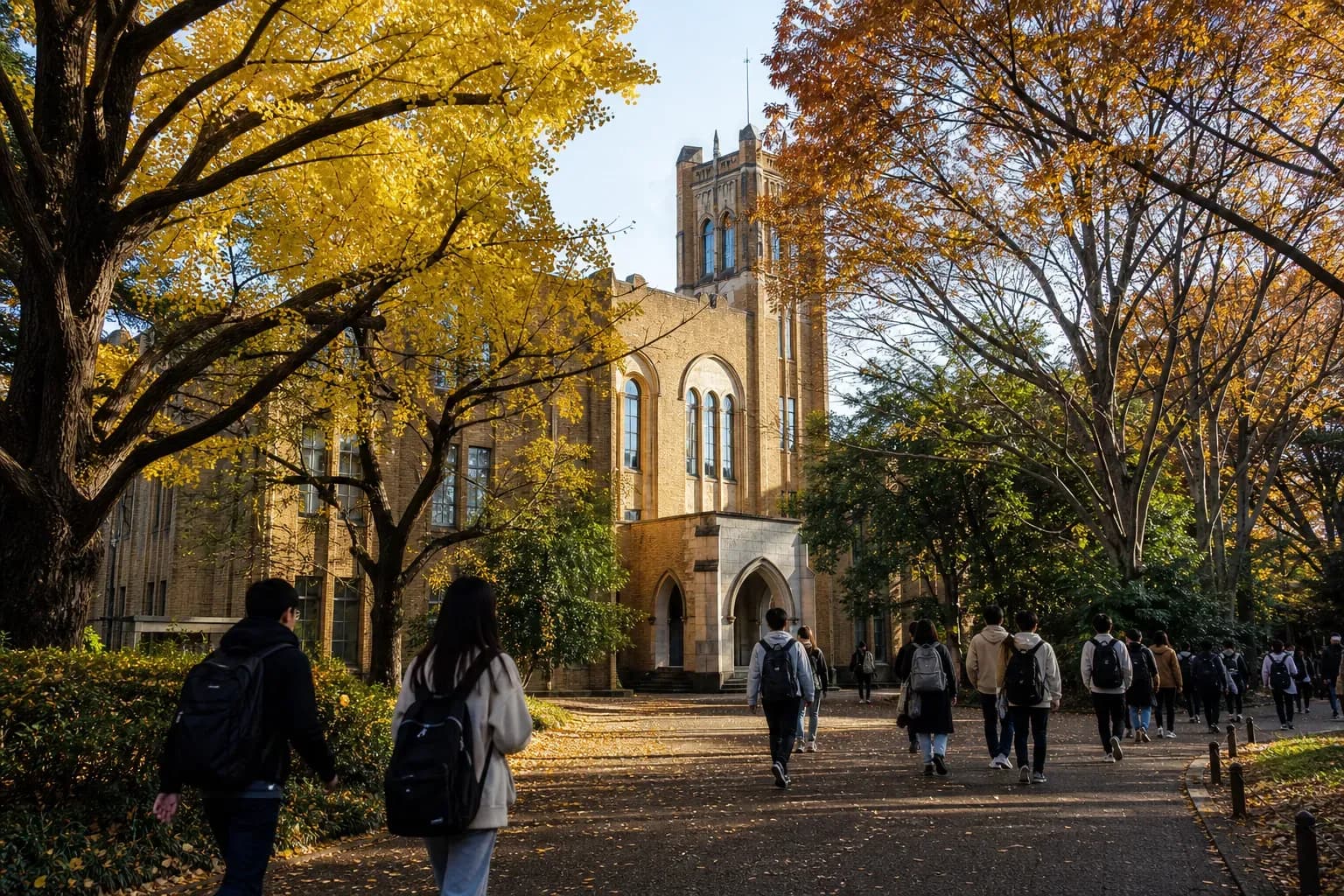
- Nishichiba Campus has extensive green space: the campus’s cherry blossom paths and ginkgo-lined avenues are top 10 among Japanese national universities
- Internationalization is being strengthened: the university has greatly expanded internationalization in recent years (SGU funding, new ETP options). You will see Japanese students + international students + short-term overseas students coexisting on campus
- Stable alumni placement: medicine, architecture, horticulture, and education all have strong placement outcomes
Chiba University is “the most underrated national university in Japan’s Greater Tokyo area.” Its image is not flashy, but its substance is solid.
7. Location / Campus Environment
Nishichiba Campus (Main Campus)
- Located in Inage Ward, Chiba City, Chiba Prefecture, a 3-minute walk from JR Nishichiba Station
- From Tokyo Station to Nishichiba: about 40 minutes by JR Sobu Line Rapid, or about 45 minutes by JR Keiyo Line
- 71-hectare campus with extensive green space, ranked among the top 10 campus environments among Japanese national universities
- Nearby: Chiba Park, central Chiba City, Tokyo Disneyland (30 minutes by car)
Inohana Campus (Medicine)
- Located in Chuo Ward, Chiba City, home to Chiba University Hospital
- Houses the School of Medicine, Faculty of Pharmaceutical Sciences, and School of Nursing
Matsudo Campus (Faculty of Horticulture)
- Located in Matsudo City, Chiba Prefecture
- Home to the Faculty of Horticulture, with a spacious green campus
- 25 minutes from Nippori in Tokyo
The Relationship Between Chiba and Tokyo
- Chiba is a “satellite city” of Tokyo: its commuter zone and living sphere are closely connected with Tokyo
- Rent is 30-40% cheaper than in Tokyo
- Housing around Nishichiba: walkable commute, monthly rent JPY 40,000-60,000
- Weekend trips to Tokyo (Shibuya, Shinjuku, Tokyo Station) take only 40 minutes
Climate
- Winter: 3-12°C, with almost no snow
- Summer: 25-32°C, coastal climate with sea breezes
- Milder than Akita and Hokkaido, and less humid than Kyoto
8. Research and Resources
Chiba University is a large research-oriented national university with above-average research output:
Libraries
- Nishichiba Main Library + Inohana + Matsudo: total collection of about 2 million volumes
- Electronic resources: JSTOR, ProQuest, Web of Science, Scopus, IEEE Xplore
- 24-hour access periods: extended hours during exam periods
Research Institutes
- Center for Environmental Health and Field Sciences, Chiba University (environmental medicine, epidemiology)
- Architecture research center at Chiba University (QS global Top 50)
- Horticulture research center at Chiba University (No. 1 in Japanese horticultural research)
- Medical Mycology Research Center, Chiba University (world-class mycology)
- Institute for Excellence in Educational Innovation, Chiba University
International Partnerships
- 150+ partner institutions
- Joint programs with UC Berkeley, Cambridge, and Sciences Po
- A comprehensive international exchange system through J-PAC
9. Notable Alumni
Chiba University alumni placement is concentrated in medicine, architecture, education, government, and art and design:
- Iwasaki Yatarō (founder of Mitsubishi Group; although his main educational background was not at Chiba, there is a historical connection with Chiba’s medical predecessor institutions)
- Multiple professors at national university medical schools in Japan and directors of major hospitals
- Multiple well-known Japanese architects (from Chiba’s architecture department)
- Government officials at various levels in Chiba Prefecture and Tokyo
- Academia: professors in horticulture, environmental studies, literature, and related fields at Japanese universities
- Sumitomo Mitsui Banking Corporation, Industrial Bank of Japan, and other financial institutions
Chiba University has strong placement in the political, business, and academic circles of Chiba Prefecture / the Tokyo suburbs, while national-level placement is concentrated in medicine, architecture, education, and academia.
10. Lesser-Known Facts About Chiba University
- Chiba University is Japan’s only national university with an independent “Faculty of Horticulture”. The Faculty of Horticulture on the Matsudo Campus traces its history back to the 1909 Prefectural Chiba Horticultural College, the birthplace of horticultural education in Japan.
- Chiba University’s architecture department is an important architectural education center outside the “Tange Kenzō system” in Japan. It has produced multiple architects who have won the Pritzker Prize and Architectural Institute of Japan awards.
- Chiba University’s Nishichiba Campus spans 71 hectares, making it one of the largest single national university campuses in the Greater Tokyo area. It is larger than UTokyo’s Hongo Campus and Tokyo Tech’s Ookayama Campus.
- Chiba University has accelerated internationalization in recent years: J-PAC becoming a degree program, ETP expansion, and continued SGU funding. This means Chiba University’s ranking and international student ratio are likely to keep rising over the next 5-10 years.
- Chiba University’s relationship with Tokyo Disneyland: Urayasu City in Chiba Prefecture is where Tokyo Disneyland is located, and Chiba University Tourism Management students use Disney as a fieldwork site. This is unique in Japan.
11. Typical Admit Profile (J-PAC / ETP International Students)
- High school GPA above 3.2/4.0
- TOEFL iBT 85+ or IELTS 6.0+
- SAT 1150+, IB 30+, or 3 A-Level subjects at C or above
- Able to clearly explain “why Chiba” and “why Japanese studies / tourism / engineering”
- Interested in Japanese culture, tourism, architecture, engineering, or horticulture
- Has one meaningful experience in overseas exposure, cross-cultural volunteering, or academic awards
- Recommendation letters from an English teacher or homeroom teacher
- Has a plan for employment in Japan or continuing to master’s or doctoral study in Japan
12. What Kind of Student Is It Best For?
✓ Good fit:
- Students who want a Japanese national university + a non-Imperial University option + Greater Tokyo access
- Families with a budget of approx. NTD 150,000-180,000 / year (national university tuition + Chiba living costs)
- Students interested in Japanese studies, tourism management, engineering, architecture, or horticulture
- Students who want the Tokyo commuter belt without Tokyo rent
- Students who do not mind that the university is “not in Japan’s Top 10” and do not prioritize rankings above all else
- Students who like a large campus with extensive green space
- Students interested in applying for a MEXT scholarship
✗ May not be the best fit:
- Students who want the halo of an elite brand-name university (such as UTokyo PEAK or Kyoto iUP)
- Students who want undergraduate life in central Tokyo
- Students interested in pure Liberal Arts (consider Sophia, ICU, or Rikkyo)
- Students who want to maximize HSP Highly Skilled Professional permanent residency pathway points (Chiba is not on the +10-point list)
- Students who insist on a 100% English-taught undergraduate degree (Chiba is “partially English-taught”)
13. HSP Highly Skilled Professional Permanent Residency Pathway
Chiba University is not on the HSP Highly Skilled Professional “+10-point bonus” list. That list is limited to 13 flagship national universities and institutions such as UTokyo, Kyoto, Tokyo Tech, Osaka, Tohoku, Kyushu, Hokkaido, Nagoya, Tsukuba, Hitotsubashi, Kobe, Waseda, and Keio. This is Chiba’s biggest disadvantage compared with the Top 13 flagships. For Taiwanese families aiming for permanent residency, this needs to be considered from the start.
However, it is still feasible for Chiba graduates to build HSP points:
- Chiba J-PAC / ETP → Japanese company / foreign company / multinational organization (annual salary JPY 5-7 million)
- Continue to a master’s at Chiba / UTokyo / Tokyo Tech → major point increase (a master’s from UTokyo / Tokyo Tech can receive the +10-point bonus)
- Accumulate 70+ points over 3-5 years → HSP Highly Skilled Professional (i)
- Apply for permanent residency after 1-3 years
Key recommendation: If your family goal is “Japanese permanent residency + the fast HSP pathway”, “Chiba undergraduate → UTokyo / Tokyo Tech master’s” is a strong combo: use Chiba’s lower undergraduate threshold, then use UTokyo’s +10-point bonus at the master’s level.
For detailed strategy, see Dr. G.’s internal guide, Post-Graduation Visa Strategy / 05_Japan_Visa_Strategy. “Chiba undergraduate → Top 13 master’s → HSP permanent residency” is a high-value two-step pathway in the Master Grad School Database / Japan section.
Conclusion
Chiba University is a university designed for students who want the most cost-efficient route into a national university in Japan’s Greater Tokyo area. It will not give you the “top-of-Japan prestige” of UTokyo PEAK, nor will it give you the fully 100% English-taught environment of AIU. But it does give you a practical 4-year option with national university tuition + Tokyo commuter access + moderate admissions threshold + full national university resources + diverse English-taught choices.
Taiwanese families most often ask: “Between Chiba University and University of Tsukuba, which one is better?” The answer is: Tsukuba wins on academic reputation, SGU flagship status, and the HSP +10-point bonus; Chiba wins on Tokyo commute, daily convenience, and admissions threshold. If your child’s SAT and GPA are not at the very top, but they want a national university in the Greater Tokyo area, Chiba is the right choice.
In one sentence: Chiba University is the most underrated national university in Japan’s Greater Tokyo area, a very high-value English-taught undergraduate entry point, with tuition of JPY 535,800 and a 40-minute commute to Tokyo. It is the hidden option best suited to families with mid-range academic profiles.