
Asia Pacific University (APU) Ritsumeikan Asia Pacific University: 50% International Students, 90+ Nationalities, and Three English-Taught Degrees in Beppu Onsen Country: APS / APM / ST
Published on December 18, 2025
If you asked every university in Japan, "Which one has the most international student body?", the answer would definitely not be UTokyo, Kyoto, AIU, or ICU. It would be a young university founded only in 2000, located on a hillside in Beppu, Oita Prefecture, Kyushu: Ritsumeikan Asia Pacific University (APU).
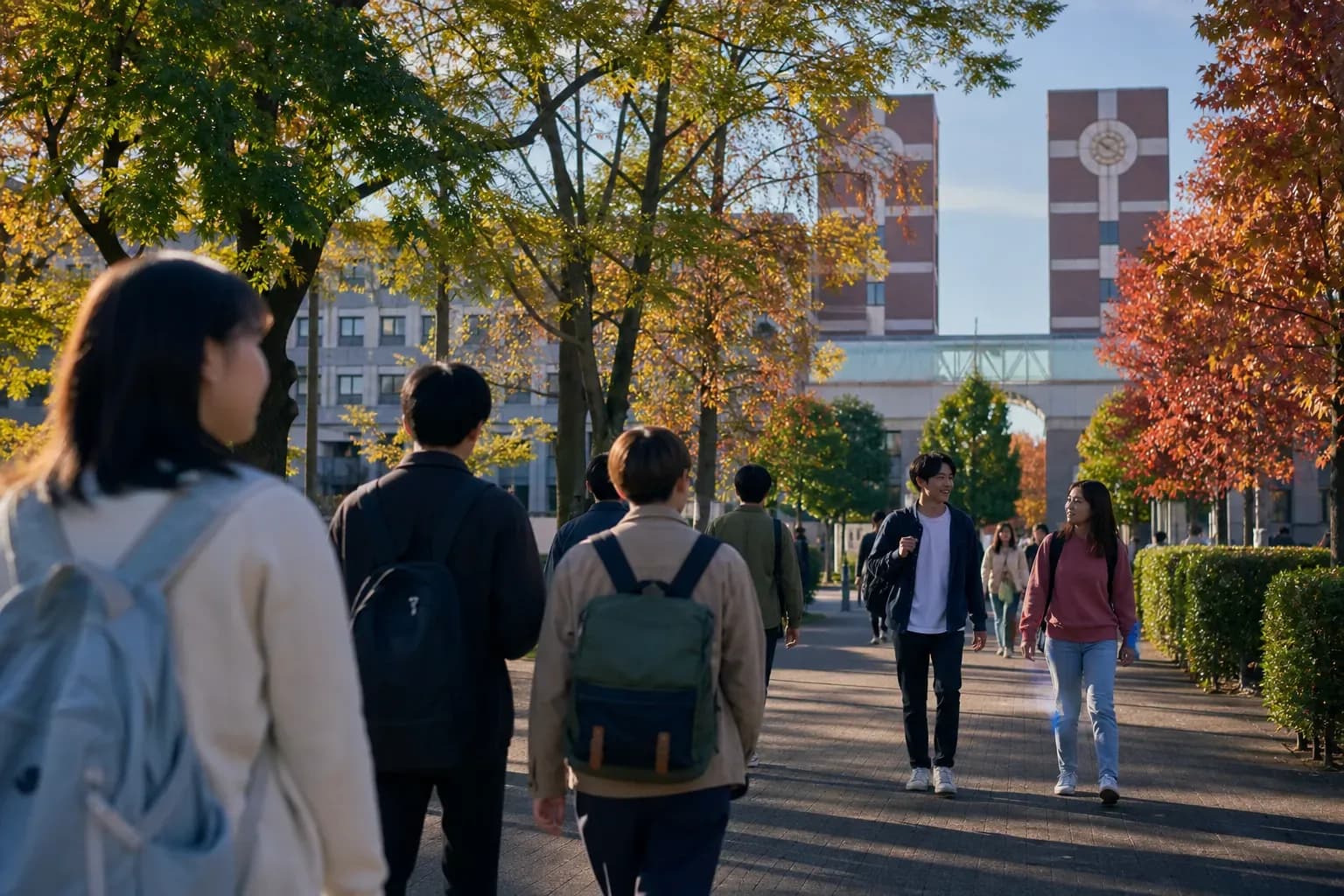
APU's student composition is a figure no other university in Japan can match: about 50% international students, from 90+ countries, speaking 50+ languages. Walk a few steps on campus and you may meet a student from Bangladesh; a few steps later, a student from Kenya; turn a corner and you meet a student from Taiwan. Even AIU cannot match this density. APU was founded in 2000 by the Ritsumeikan Trust system and positioned as "Japan's first truly international university." As of 2026, it remains the university with the highest proportion of international students in Japan.
For Taiwanese families, APU is the most direct answer for students who "want an English-taught undergraduate degree in Japan, do not care too much about rankings, want an extremely diverse international environment, and have a moderate budget." Every year, many Taiwanese students choose APU. This university has a very strong presence in Taiwan's study-abroad community.
1. Basic Information
| Item | Details |
|---|---|
| Founded | 2000 (established through a three-party partnership among the Ritsumeikan Trust system, Oita Prefecture, and Beppu City) |
| Type | Private university (under the Ritsumeikan Trust system, with independent legal status) |
| Location | Jumonjibaru, Beppu, Oita Prefecture (eastern coast of Kyushu) |
| Campus | About 41 hectares (on a hillside overlooking Beppu Bay) |
| Undergraduates | ~5,800 |
| Graduate students | ~250 |
| International student ratio | About 50% (No. 1 in Japan) |
| Student nationalities | 90+ countries |
| Student-faculty ratio | 1:35 |
| Motto | "Freedom, Peace, and Humanity" |
2. World Rankings
| Ranking | Position |
|---|---|
| QS World 2026 | #1201-1400 |
| THE World 2026 | #1001+ |
| THE Japan University Rankings 2024 | #36 |
| THE Japan "International Outlook" category | #1 or Top 3 (for many consecutive years) |
| THE Impact Rankings 2024 | Top 80 globally (strong sustainability indicators) |
The QS / THE global rankings may look ordinary, but APU's real selling point is not research ranking. It is "Japan's No. 1 university for international outlook over many consecutive years." If you value an international student body, cross-cultural experience, and English immersion, APU is the undisputed No. 1 in Japan. For Taiwanese families: APU is not a school that sells itself through rankings; it sells an irreplaceable international ecosystem.
3. Admissions Data (2024 Entry)
APU uses an independent admissions system and does not follow Japan's standard general entrance examination route. International students have two pathways: English-based Admission and Japanese-based Admission. Taiwanese families usually choose the former.
English-based Admission Applications
| Indicator | Figure |
|---|---|
| Applicants | ~2,500-3,500 |
| Admitted students | ~1,200-1,500 |
| Overall acceptance rate | About 40-50% |
| Taiwanese students admitted per year | 30-50 students (including 5-10 scholarship recipients) |
Application Requirements
| Item | Requirement |
|---|---|
| English proficiency test | TOEFL iBT 71+ / IELTS 5.5+ / TOEIC 700+ (iBT 80+ recommended for stronger scholarship chances) |
| Standardized tests | SAT 1050+, ACT 22+, IB 28+, A-Level 3 subjects at D or above (overall threshold is relatively low) |
| Japanese | Not required at all |
| High school GPA | 3.0/4.0 or above |
| Recommendation letters | 1-2 letters |
| Essay | Personal Statement + Why APU + academic interests |
| Interview | Some applicants are required to complete an online interview |
International Students
- International students account for about 50% of the entire university, a number no other university in Japan can match
- Students come from 90+ countries
- About 50% of faculty are non-Japanese (including faculty from Europe, North America, Asia, and Africa)
- Students' first languages include 50+ languages
4. Tuition and Financial Aid
2025 Tuition
| Item | Amount (JPY) | Approx. NTD |
|---|---|---|
| Enrollment fee | 300,000 | ~63,000 |
| Tuition (annual) | About 1,400,000 | ~290,000 |
| Facility fees / miscellaneous fees | About 150,000 | ~32,000 |
| AP House dormitory (mandatory in Year 1, monthly) | 50,000-70,000 | ~11,000-15,000 |
| Beppu living expenses (monthly, including food) | 50,000-65,000 | ~11,000-14,000 |
| Estimated total cost for four years | About JPY 8-9.5M | ~NTD 1.7-2.0M |
Living costs in Beppu are 50% lower than in Tokyo, which is one of APU's major advantages compared with other private universities.
APU Scholarships for International Students (Especially Generous)
APU has one of the most proactive scholarship designs for international students among private universities in Japan:
- APU Tuition Reduction Scholarship: five levels of tuition reduction at 30%, 50%, 65%, 80%, and 100%
- APU + JASSO scholarship combination: tuition reduction + monthly JPY 48,000 living stipend
- Oita Prefecture / Beppu City scholarships: local government support
- MEXT Embassy Recommendation Scholarship: available to a small number of APU students
- APU extracurricular activity scholarships: additional consideration for talents beyond academics
In practice, most Taiwanese APU international students receive a 30-50% tuition reduction, bringing the annual cost for Taiwanese families down to around NTD 120,000-180,000. This cost-performance ratio is exceptionally strong among private universities in Japan.
5. Academic Structure / Signature Programs
APU has only two colleges and three major areas, but the design is highly international:
College of Asia Pacific Studies (APS)
College of Asia Pacific Studies:
- Asia Pacific Studies major: politics, economics, culture, international relations, development studies
- Best for: students interested in international relations, diplomacy, NGOs, and international organizations
- Advanced fields: International Relations & Peace Studies, Culture, Society & Media, Tourism & Hospitality, Environment & Development
College of International Management (APM)
College of International Management:
- Asia Pacific Management major: business, accounting, marketing, finance, strategic management, entrepreneurship
- Best for: students aiming for multinational companies, trading companies, consulting, or entrepreneurship
- Advanced fields: Marketing & Management, Accounting & Finance, Strategic Management & Organization, Innovation & Economics
College of Sustainability and Tourism (ST)
Established in 2023, the College of Sustainability and Tourism:
- Sustainability Tourism major: sustainable development, tourism management, environmental policy
- Best for: students interested in the environment, sustainability, and the tourism industry
- Deeply integrated with the SDGs (Sustainable Development Goals)
- Beppu's hot spring region serves as a natural fieldwork setting
Bilingual Degree System
APU's most distinctive design: all courses are offered in both English and Japanese versions.
- Students can complete the degree 100% in English (the choice of most Taiwanese international students)
- Or students can gradually increase the proportion of Japanese-taught courses (completing half of their coursework in Japanese before graduation and reaching N2 / N1 proficiency)
- This is a "Bilingual Degree," and APU is the only private university in Japan that does this
6. Campus Culture / School Personality
APU's culture can be summarized in just a few words: diverse, young, energetic, bilingual, and Beppu hot springs.
- "Multicultural Cooperative Living": first-year students are required to live in AP House, the student dormitory, where international and Japanese students are randomly paired
- Languages heard on campus: English, Japanese, Chinese, Korean, Indonesian, Vietnamese, Bengali, Thai, Arabic, French, Portuguese, Swahili. No other university in Japan is this diverse
- Monthly international cultural festivals: every month, students from a specific country host a cultural day on campus, featuring food, performances, and talks
- Very high student club density: 300+ student organizations, from baseball, basketball, debate, and Model UN to traditional Japanese tea ceremony, calligraphy, and aikido
- "APU Spirit": young, entrepreneurial, and free from the baggage of traditional elite universities
APU is "the least Japanese university in Japan." This is its biggest selling point, and also its biggest source of debate.
7. Location / Campus Environment
Beppu City
Beppu is Japan's hot spring capital. It has the country's highest hot spring output, 2,300 hot spring sources, and eight types of spring water, including the eight famous "hell" hot springs.
- Population of about 120,000, a typical mid-sized regional city in Japan
- Fukuoka to Beppu: 2 hours by JR limited express, or about 1.5 hours by JR Shinkansen + transfer
- Downtown Beppu to APU: 30 minutes by bus (dedicated buses run every 30 minutes)
- The view of Beppu Bay from APU's hillside is one of the most beautiful university landscapes in Japan
Oita Airport
- Oita Airport -> Beppu: 50 minutes by airport bus
- Direct flights from Oita Airport to Tokyo (90 minutes), Seoul, Shanghai, and Taipei (seasonal)
Around Campus
- The campus is located in Jumonjibaru on a hillside, so you step out of the campus gate and immediately meet a slope
- On campus, there is a 7-Eleven, Lawson, gym, cafeteria, and cafe
- A mountain hot spring is five minutes away on foot from campus, so students can soak in a hot spring after late classes
- Downtown Beppu has complete shopping, dining, bookstores, and movie theaters
Climate
- Winter: 5-12°C, with almost no snow (Kyushu has a lower latitude)
- Summer: 22-32°C, with sea breezes and relatively comfortable weather
- Much milder than AIU in Akita, which is a major advantage for Taiwanese families who dislike cold weather
8. Research and Resources
APU is a teaching-oriented and internationalization-oriented university. It is not a research university, and this should be made clear upfront.
Library
- About 300,000 volumes (multilingual collections in English, Japanese, Chinese, Korean, Indonesian, Vietnamese, and more)
- Electronic resources: full access to JSTOR, ProQuest, and EBSCO
- Extended 24-hour opening periods during exams
Research Institutes
- APU Research Center for Asia Pacific Studies
- APU Center for Inclusive Leadership
- APU Ritsumeikan Center for Asia Pacific Studies
- Shares some research resources with its parent institution, Ritsumeikan
International Partnership Network
- Within the Ritsumeikan Trust system: shared resources with Ritsumeikan University (Kyoto / Osaka / Shiga)
- 180+ direct partner universities + 460+ partner universities shared through the Ritsumeikan Trust system
- Deep cooperation with ASEAN and United Nations Asia-Pacific agencies
- Mandatory / recommended overseas internship system
9. Notable Alumni
APU was founded only 25 years ago, so its alumni base is still small, but its placement record has already been established:
- Multiple central government officials and diplomats from Southeast Asian, South Asian, and African countries (APU is a "cradle for future leaders of emerging Asian countries")
- The wife of Tadashi Yanai (Fast Retailing Group; the Yanai family has connections with APU)
- Several senior Asia-Pacific executives at Japanese multinational corporations (especially in Singapore, Jakarta, and Bangkok offices)
- Staff at the United Nations Development Programme, JICA, and the ASEAN Secretariat (APU is one of the key sources of Japan-based talent for these organizations)
- Many Taiwanese entrepreneurs and operators in Japan: the APU Taiwan Alumni Chapter has several hundred members
APU's placement strength is "a global career gateway for working in emerging Asian markets." This is what makes it irreplaceable.
10. Lesser-Known Facts About APU
- APU is the only university in Japan with students from 90+ countries and 50% international students. Even ICU and AIU cannot reach this density (ICU is about 25%, AIU about 20%).
- APU's founding background: Oita Prefecture, Beppu City, and the Ritsumeikan Trust jointly established the university in 2000, with local governments investing tens of billions of yen to build the campus. It is a representative case of regional revitalization + international education.
- APU's AP House student dormitory was Japan's first university dormitory system to require random pairing between international and Japanese students. Each room / floor must include mixed nationalities.
- APU has a very strong presence in Taiwan's study-abroad market: APU admissions officers often appear at high school information sessions and education fairs in Taipei, New Taipei, and Taichung, which is rare among private universities in Japan.
- APU students can enjoy hot springs near campus: the mountain hot springs near campus and Beppu Onsen are part of everyday life for APU students. No other university in Japan can match this "hot spring town campus life."
11. Typical Admitted Student Profile (International Students)
- High school GPA of 3.0/4.0 or above over three years
- TOEFL iBT 80+ or IELTS 6.0+ (iBT 95+ needed for a full scholarship)
- SAT 1100+, IB 30+, or A-Level 3C or above
- Can clearly explain "why APU" and "why Beppu"
- Has depth in at least one of the following: overseas experience, cross-cultural exchange, club leadership, community service
- Interested in international relations, business, sustainability, or Asian studies
- Welcomes diversity, is open-minded, and adapts well
- Recommendation letters from an English teacher or homeroom teacher
- Has a vision for "working in Asia after graduation or continuing to graduate school overseas"
12. What Kind of Student Is APU Suitable For?
✓ Suitable for:
- Students who want Japan's most international campus (50% international students, 90+ nationalities)
- Students who do not care about "QS Top 500" status
- Students interested in Asian studies, international management, sustainable tourism, and cross-cultural communication
- Families with a budget of about NTD 120,000-180,000 / year (after receiving a 30-50% scholarship)
- Students who want mandatory mixed dormitory life and mandatory cross-cultural living
- Students who prefer warm weather (Kyushu, not cold) and hot spring culture
- Students aiming for emerging Asian markets, international organizations, trading companies, or multinational corporations
- Students who want a flexible bilingual degree (mainly English-taught, with optional advanced Japanese)
✗ Not necessarily suitable for:
- Students who want to study medicine, engineering, or pure science (APU has no science, engineering, or medicine)
- Students who want the prestige of a QS Top 200 university, or who face strong parental pressure around rankings
- Students who want to live in downtown Tokyo, Kyoto, or Osaka (APU is genuinely remote)
- Students with a strong interest in Japanese studies or pure Japanese culture (APU's "Japaneseness" is actually its weakest aspect)
- Students who want a research university or who aspire to become professors
13. HSP Highly Skilled Professional Permanent Residency Pathway
APU is not on the HSP Highly Skilled Professional "+10 point bonus" list (that list is limited to 13 flagship national universities). APU graduates need to accumulate HSP points through salary + work experience + English ability + multilingual ability.
The most common HSP pathways for APU graduates:
- APU -> Japanese multinational Asia-Pacific divisions / trading companies / multinational corporations (annual salary of JPY 5-8M)
- Reach 70+ points after 3-5 years -> HSP Highly Skilled Professional (i)(a), (b), or (c) status
- Apply for permanent residency after 1-3 more years
APU's special advantage: because students come from 90+ countries, APU graduates often command 3-4 languages (Chinese, English, Japanese + mother tongue). This is highly sought-after in Japan's Asia-Pacific talent market. Recruiters at Japanese trading companies and multinational corporations' Asia-Pacific divisions tend to view APU more favorably than ordinary private universities.
For detailed strategy, refer to Dr. G.'s internal guide, Post-Graduation Visa Strategy / 05_Japan_Visa_Strategy. If you are planning an "APU -> U.S. / U.K. / Singapore master's degree -> return to the Asia-Pacific region for work" path, Master Grad School Database / Japan, Top30 Cost-Performance Report, and Japan International Schools K12 all include relevant evaluations.
Conclusion
APU is a university designed "for students who do not want to be traditional Japanese university students." It will not give you the prestige halo of UTokyo, Kyoto University, Waseda, or Keio, but it will give you four years of a unique experience: "on a hillside in Beppu, surrounded by classmates from 90+ countries, immersed in English and Japanese, and living a hot spring town campus life."
Taiwanese families most often ask: "APU ranks so low. Is it worth it?" That is still the wrong question. APU's selling point has never been rankings. It is "Japan's most thorough multicultural ecosystem + a four-year degree possible within NTD 2 million + a bilingual degree + a career gateway to the Asia-Pacific region."
In one sentence: if what you want is a university experience in Japan that feels most like ASEAN + a microcosm of the world + Beppu hot spring country, APU is the only answer in Japan, and it has been the most popular English-taught university in Japan among Taiwanese families for nearly 20 years.